The cook behind the hot chicken course
Home-kitchen technique from brine to brush, written for the cook making dinner.
Crust
Holds
Paste
By ratio
Kitchen
Ordinary
Measure
Weights
Style
Home
Method
Taught
Why this course exists
The same three failures, over and over
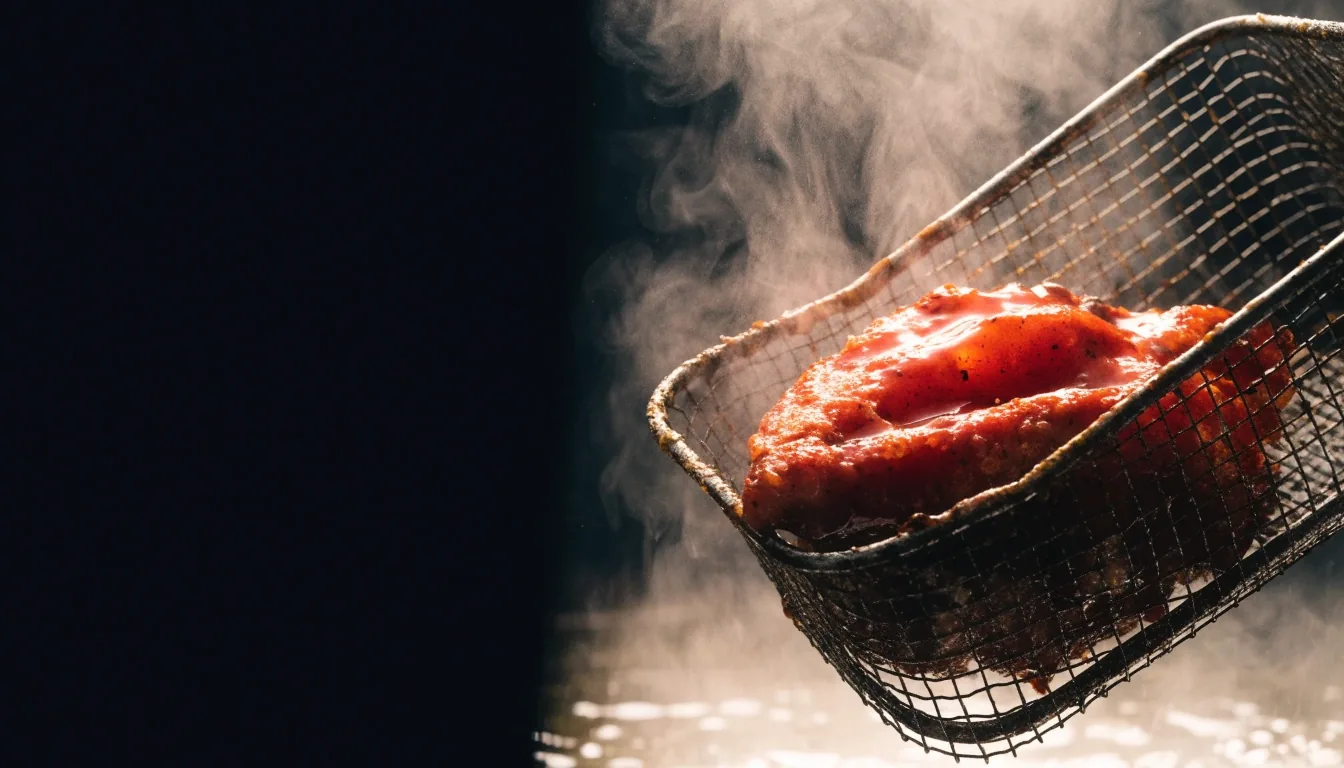
Soggy crust. A paste that tasted like powder. Chicken that was hot but not good. This course exists because the home version of Nashville hot chicken kept failing in the same ways, and the failures were always in the same three places: the brine, the fry, and the brush.
Fixing those failures in a normal kitchen, not a restaurant one, is what the whole curriculum is built around. The instructor has spent years cooking the style at home and studying how the originals do it, from the heritage method credited to Prince's Hot Chicken in the 1930s to the modern recipe versions that brought it to home cooks.
Hot is not the same as good
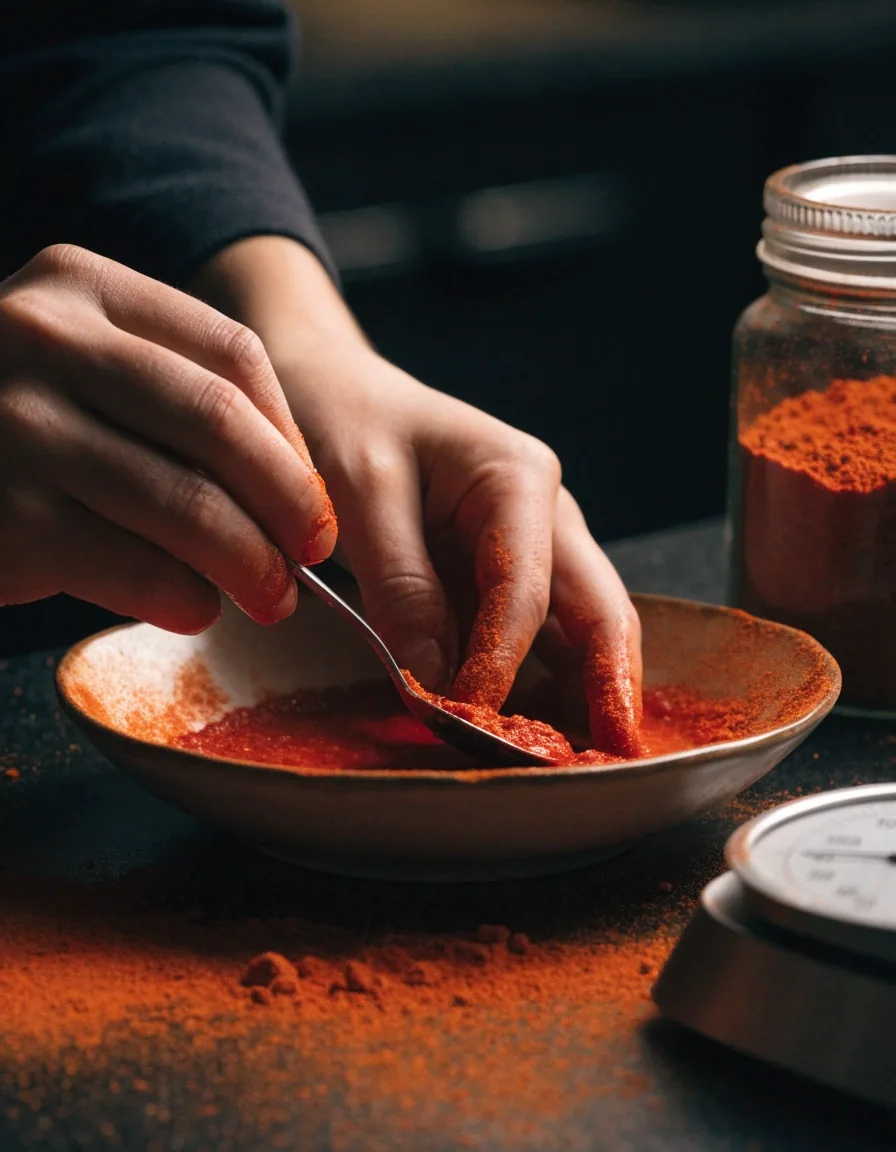
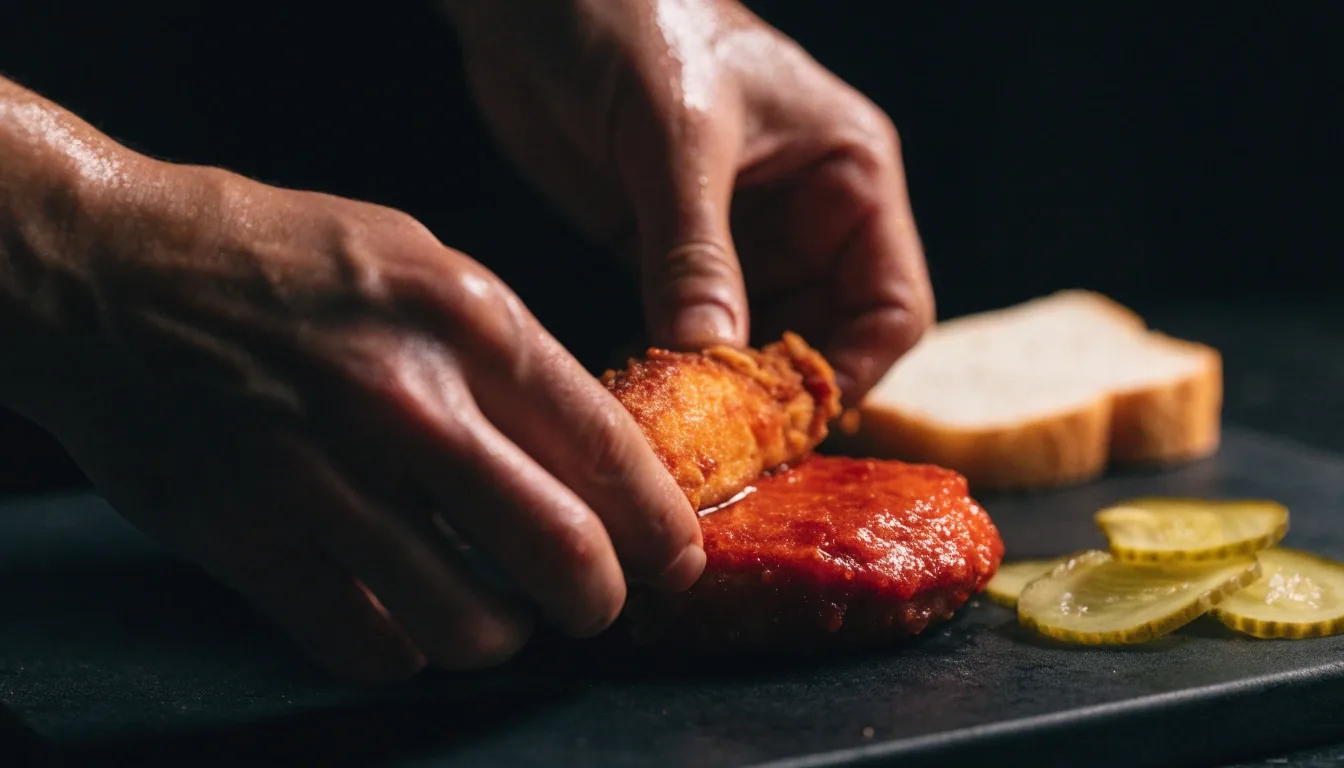
Every recipe here is judged on two things: a crust that holds and a glaze that tastes balanced rather than raw.
Where the method comes from
Nashville hot chicken has a clear lineage, and the course teaches the traditional method as the baseline. Everything else, from sliders to chicken and waffles, is an extension of it.
The standards behind every recipe
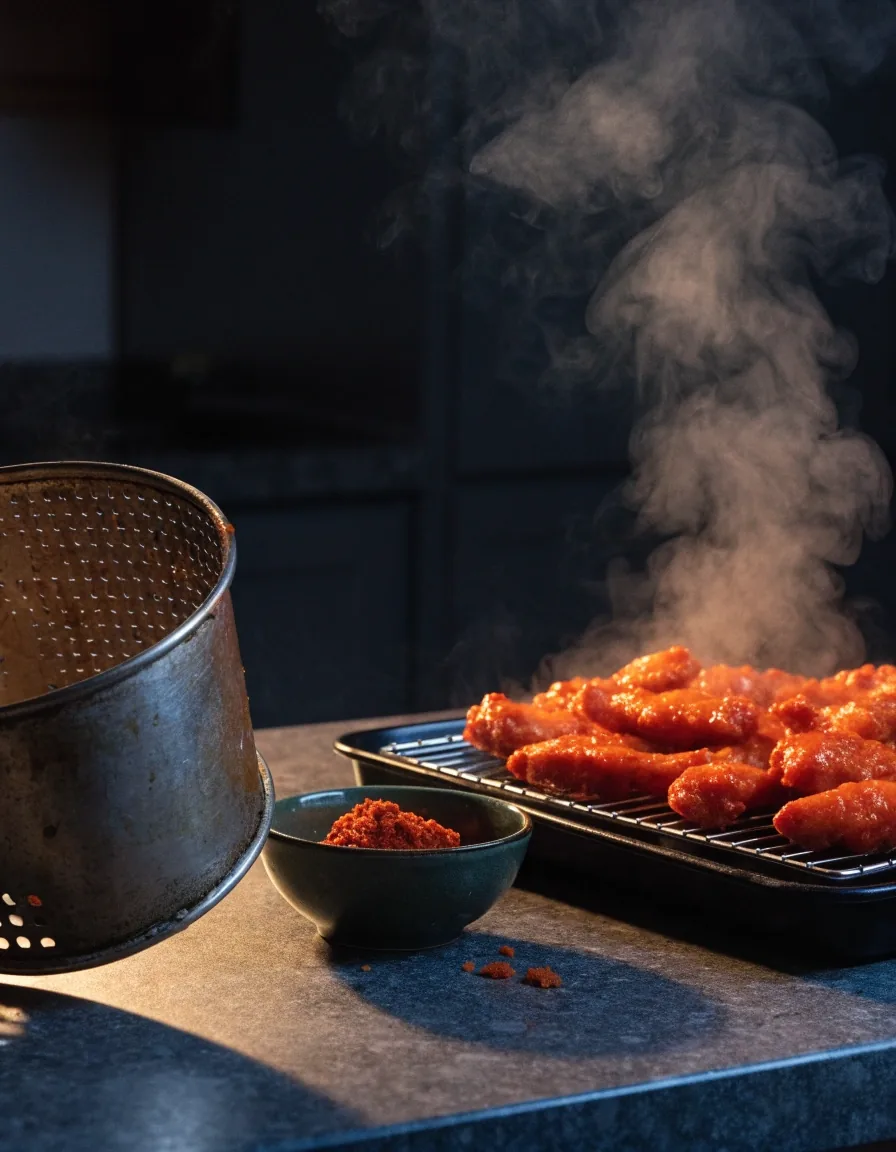
Every recipe in the course is tested in a home kitchen on ordinary equipment. Recipes are written with weights for the paste because volume measurements are where heat control breaks down — a packed tablespoon of cayenne is not the same twice.
Each one is also checked for the two failures that matter most: crust that holds after the brush, and glaze that tastes balanced rather than raw. A recipe that only reads well on paper does not make it into the library.
Crust that holds
Tested for crispness after the paste goes on, not before. A coating that goes soft in five minutes gets reworked.
Glaze that tastes right
Balanced fa, salt, acid and heat — not just powder heat. If the paste tastes raw, the ratio is wrong.
Written in grams
Paste components are given by weight so the heat ladder holds up when you move from one level to the next.
Home equipment only
Dutch oven, cast-iron skillet, or a countertop fryer. No step assumes gear a home cook would not own.
Why the paste gets its own module
Most hot chicken recipes treat the paste as a step, not a subject. This course treats it as the core skill because the paste is what separates hot chicken from spicy fried chicken.
It is cayenne mixed with a fa, applied after frying, and it is the reason the color is red-orange and the crust stays crisp. Teaching the paste by ratio is what makes the heat ladder possible at all — you cannot move from a mild plate to a Reaper-level one by feel alone.
How the course stays current
The style keeps moving. Menus now run hot chicken into poutine, beignets, and brunch plates, and the course updates when a format proves it belongs rather than when it trends.
Recipe refinements and new formats are added to the library and included for the life of your access. If a tested version of a recipe improves on the one you learned, you get the updated version in the same place you found the original.
- New street-food formats added when they hold up in a home kitchen, not when they go viral.
- Existing paste ratios revised only when a test batch proves a clearer number.
- Updated lessons land in your library automatically — nothing to re-buy.
What this course is not
It is not a restaurant operations course, and it does not cover commercial volume, cost-per-plate math, or supplier sourcing. It is home-kitchen technique from brine to brush, written for someone cooking dinner.
If you want a franchise playbook, this is the wrong course. If you want to make a better plate of hot chicken on a Tuesday, it is the right one.
Covered
Brine, dredge, fry, drain, paste, brush, plate — tenders, sliders, and wings across the full heat ladder.
Not covered
Commercial fryer scheduling, plate costing, staffing, and wholesale ingredient sourcing.
A note on the name
The course teaches the dave's hot chicken style of tenders, sliders, and wings, along with the traditional method behind it. If you have searched for daves hot chicken recipes, dave hot chicken copycats, or daves chicken heat levels, this is the home-kitchen route to the same plate.
It is an independent cooking course and not affiliated with any restaurant brand. The brand name is used to describe the style being taught, not to imply a partnership.
Questions about the instructor
Still deciding? These are the questions that come up most before people enroll.
Read the FAQWho actually teaches the recipes?
Do I need a deep fryer or restaurant gear?
Why are the paste measurements given by weight?
Is this affiliated with a restaurant chain?
What if I only want to cook one thing?
Learn it from someone who cooks it at home
If the failures above sound familiar, the course was built to fix them in order — brine, fry, paste, brush, plate. Start with the curriculum if you want to see the sequence before you commit, or enroll if you already know what you want to cook first.
Where to go next
Kitchen desk hours
Monday–Friday, 9:00 AM – 6:00 PM (Central Time)
+1-615-555-0129
[email protected]